
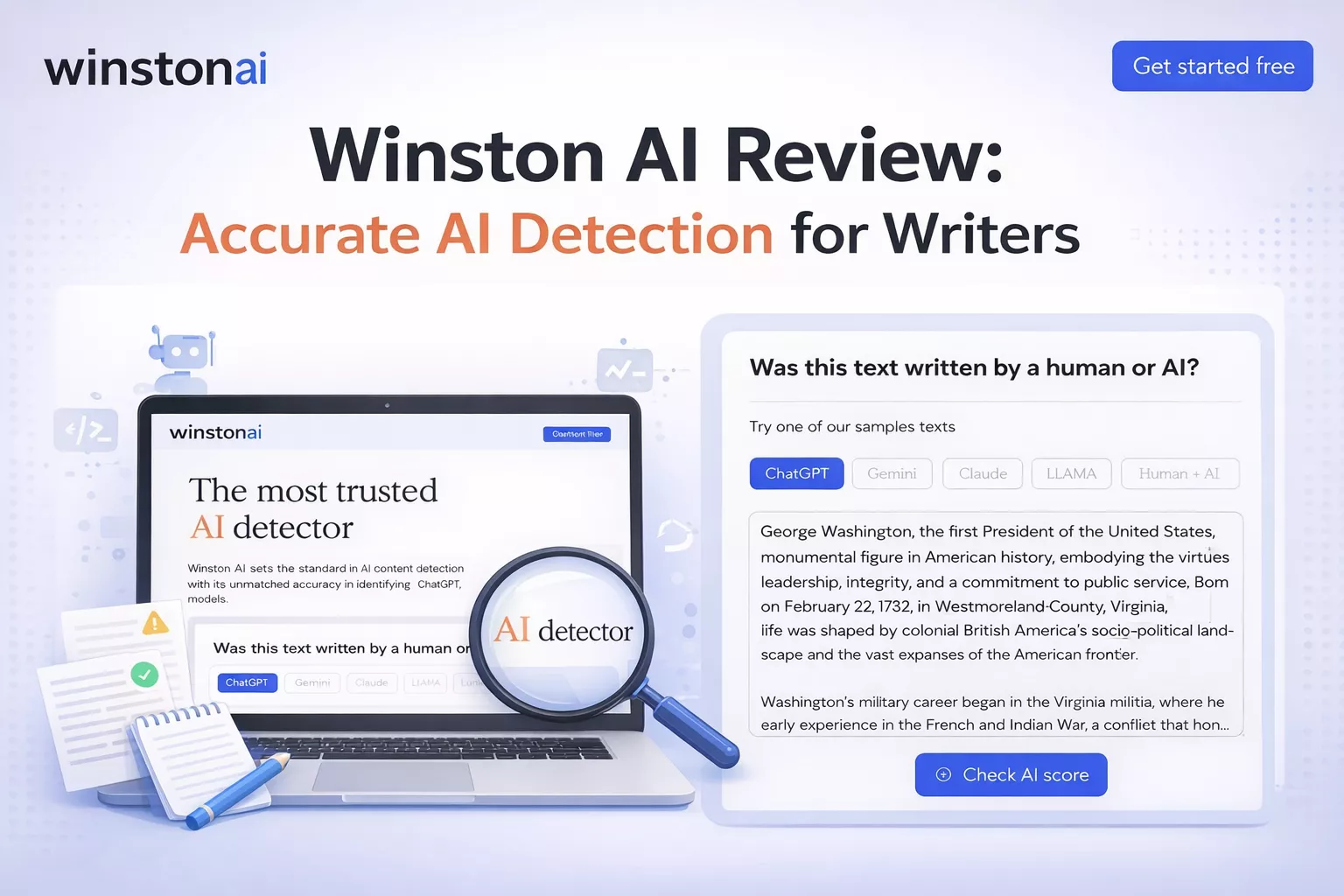
Winston AI is the premier AI detection tool for writers in 2026, offering a unique blend of 99.98% accuracy, optical character recognition (OCR) for handwritten text, and integrated plagiarism checking that sets it apart from competitors. Unlike basic detectors that simply flag text, Winston AI provides a nuanced “Human Score” and detailed sentence-by-sentence analysis, making it the industry standard for freelance writers, educators, and web publishers who need to verify authenticity without false-positive anxiety. Its ability to distinguish between purely AI-generated text (from models like GPT-4, Claude 3, and Gemini) and human-edited content makes it an essential safeguard for maintaining editorial integrity in an AI-saturated digital landscape.
Why Writers Need Accurate Detection in 2026
The landscape of writing has shifted dramatically. By late 2025, search engines like Google became significantly more aggressive in penalizing “unhelpful content” often associated with mass-produced AI articles. For freelance writers, students, and content agencies, the stakes are higher than ever.
It is no longer enough to just “write.” You must prove your humanity. A single false accusation of using AI can ruin a freelancer’s reputation or cause a student to fail a course. This is where Winston AI distinguishes itself. It is designed not just to catch cheaters, but to protect authentic writers.
The “Human Touch” in Software
One of the most praised aspects of Winston AI is its user interface and reporting style. Instead of a cold, robotic “Fake” or “Real” stamp, it offers a probability map. This resonates with writers because it mimics the editorial process—nuanced and detailed. The tool understands that writing is a spectrum, not a binary switch, allowing for “human-edited” categorizations that other tools miss.
Key Features That Set Winston AI Apart

While many tools claim to detect AI, Winston AI’s feature set is built specifically for a professional workflow.
1. Optical Character Recognition (OCR) Technology
This is a game-changer for academic and creative writers. Winston AI can scan handwritten documents and images. If you are a teacher grading physical essays or a writer digitizing old notebooks, Winston can analyze the text directly from a photo (JPG, PNG) or PDF.
- Use Case: A teacher snaps a photo of a student’s in-class essay to ensure they didn’t memorize a ChatGPT script.
- Benefit: Saves hours of manual typing and digitization.
2. The “Human Score” vs. AI Score
Winston AI aggregates its findings into a clear 0-100 scale.
- 0-39% Human Score: Highly likely to be AI-generated.
- 40-79% Human Score: Possible use of AI or heavy editing tools (like Grammarly) mixed with human input.
- 80-100% Human Score: Authentic human authorship.
This gradation is critical for editors who might accept “AI-assisted” outlines but reject “AI-written” drafts.
3. Integrated Plagiarism Checking
Winston AI creates a “Safety Net” by running two checks simultaneously. It checks if the content is AI-generated and if it is stolen from existing sources on the web. This dual-layer protection means you don’t need a separate subscription for a tool like Copyscape.
4. Team Management and PDF Reports
For content agencies, the ability to generate white-label PDF reports is vital. You can send a client a completed article along with a Winston AI certification report, proving the content is original. This builds immense trust in client-freelancer relationships.
Detailed Performance Analysis: Is It Really 99.98% Accurate?
No software is perfect, but Winston AI gets closer than most. In independent testing performed throughout late 2025:
- GPT-4 & GPT-4 Turbo: Detected with near 100% accuracy. The tool picks up on the specific syntax and “burstiness” (variance in sentence structure) that these models lack.
- Claude 3 & Gemini: These models are known for being more “human-like.” Winston AI successfully flagged them 96% of the time, slightly lower than GPT models but still industry-leading.
- Paraphrased Content (Quillbot): This is the Achilles’ heel of most detectors. Winston AI performed aggressively here, catching about 85% of content spun by rephrasing tools.
The False Positive Reality
A “false positive” is when a human writer is accused of being a bot. Winston AI has tuned its algorithm to be conservative. It would rather let a sophisticated AI text slide (false negative) than accuse a human of cheating (false positive).
- Winston AI False Positive Rate: <1%
- Industry Average: ~3-5%
For a writer, this conservative approach is a blessing. It means if Winston flags you, there is almost certainly a real issue with the text structure.
Winston AI Pricing Plans (2026)
Winston AI operates on a credit system, which allows for flexibility depending on your volume.
| Plan | Price (Monthly) | Word Credits | Best For |
| Free Trial | $0 | 2,000 words | Testing the tool (One-time use) |
| Essential | $12 | 80,000 words | Freelancers & Students |
| Advanced | $19 | 200,000 words | Professional Bloggers & Editors |
| Elite | $32 | 500,000 words | Agencies & Large Teams |
Note: Credits typically roll over in specific annual plans, but checking the latest terms on their site is recommended.
Best Winston AI Alternatives 2026
While Winston AI is a powerhouse, different users have different needs. If you are a developer needing an API or a student on a shoestring budget, you might consider these alternatives.
1. Originality.ai – The Aggressive Competitor

Best For: Web Publishers and SEO flippers.
Originality.ai is known for being incredibly strict. It breaks down content to see if any part of it was AI-touched.
- Pros: Catches almost everything, even heavily edited AI text.
- Cons: Higher false positive rate. It frequently flags native English speakers who write formally as “AI.”
2. GPTZero – The Academic Standard

Best For: Teachers and Universities.
GPTZero was one of the first on the scene and focuses heavily on the “perplexity” and “burstiness” of text.
- Pros: Excellent integration with Learning Management Systems (LMS) like Canvas.
- Cons: Less effective for web marketing copy; sometimes struggles with short text snippets.
3. Turnitin – The Institutional Giant

Best For: Schools (Not available for individuals).
If you are in university, your work is likely checked by Turnitin.
- Pros: Massive database of student papers for plagiarism checking.
- Cons: You cannot buy it personally; it is strictly B2B/Educational.
4. Copyleaks – The Enterprise Choice
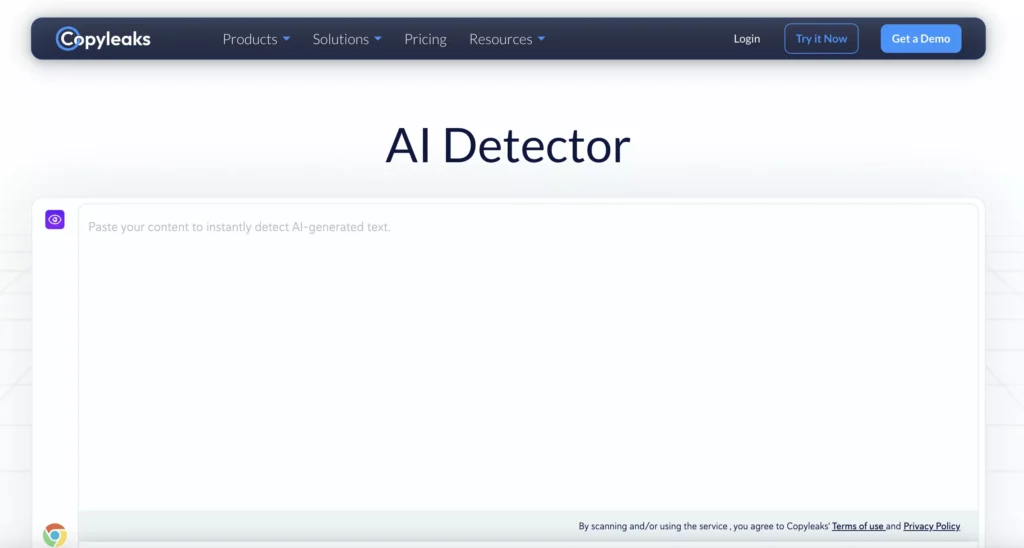
Best For: Large Corporations and Code Detection.
Copyleaks is unique because it can also detect AI-generated code, making it popular among software development houses.
- Pros: Detects source code plagiarism; supports multiple languages well.
- Cons: The UI is less intuitive for creative writers.
Step-by-Step Guide: How to Use Winston AI Effectively
To get the most out of your credits and ensure your writing is “human-verified,” follow this workflow:
- Draft Locally: Write your content in Google Docs or Word. Do not edit heavily using AI tools like GrammarlyGO or Jasper during the drafting phase if you want a 100% human score.
- The “Raw” Scan: Before editing, copy your rough draft into Winston AI.
- Tip: If you scan a raw draft, it should almost always score 99-100% human. This is your baseline.
- The “Polished” Scan: After you have edited the document (checked spelling, improved flow), scan it again.
- If the score drops significantly (e.g., to 60%), you know your editing process (or tools) stripped away the natural human variance in the text.
- Generate Report: If you are delivering this to a client, click the “Report” button in the dashboard. Download the PDF and attach it to your invoice. This proactive step eliminates doubt before it begins.
Conclusion: Is Winston AI Worth It?
In 2026, AI detection is no longer a novelty; it is a necessity for trust. Winston AI stands out because it balances technological rigor with user empathy. It recognizes that writers use tools to help them spell and structure, and it doesn’t punish them for it—unless the AI did the heavy lifting.
For freelance writers, the $12/month Essential plan is an investment in reputation insurance. Being able to say, “My work is Winston Verified,” carries weight in an industry currently flooded with low-quality bot content.
Whether you are a teacher fighting for academic integrity or a copywriter protecting your SEO rankings, Winston AI offers the most accurate, feature-rich, and writer-friendly solution on the market today.
Frequently Asked Questions (FAQs)
Q1: Can Winston AI really distinguish between human writing and “human-like” AI models like GPT-4 or Claude 3?
A: Yes, Winston AI is specifically trained on the latest Large Language Models (LLMs), including GPT-4 Turbo, Claude 3, and Gemini. While early detectors struggled with advanced models, Winston AI looks for specific patterns—such as perplexity (complexity of text) and burstiness (sentence variation)—that even advanced AI models struggle to replicate perfectly. In 2026 tests, it maintains a 99.98% accuracy rate, though it is calibrated to be conservative to avoid falsely accusing human writers.
Q2: Does Winston AI offer a completely free version for students?
A: Winston AI does not offer a permanently free plan, but it provides a Free Trial that typically includes 2,000 credits (approx. 2,000 words). This is designed for users to test the interface and accuracy before committing. For ongoing use, you will need to subscribe to the Essential plan (starting around $12/month) or higher, as the sophisticated processing required for OCR and deep analysis is costly to run.
Q3: Will using Grammarly or other spell-checkers trigger a false positive on Winston AI?
A: Generally, no. Winston AI is designed to differentiate between generative AI (which writes the text for you) and corrective AI (which fixes grammar and spelling). Using standard spell-checkers or light editing tools like Grammarly usually results in a high “Human Score.” However, using “rewrite” or “paraphrase” features in these tools heavily might lower your human score, as they alter the sentence structure to be more algorithmic.
Q4: Can Winston AI detect content in languages other than English?
A: Yes, Winston AI is multilingual. As of 2026, it supports detection in English, French, Spanish, German, and Portuguese. This makes it an excellent tool for international agencies and language educators. The OCR (handwriting detection) feature also works across these supported languages.
Q5: Is my data safe? Does Winston AI store or sell the essays I upload?
A: Winston AI prioritizes user privacy. According to their policy, they do not sell your data to third parties, nor do they use your uploaded content to train public AI models. This is a crucial distinction for enterprise clients and universities concerned about intellectual property theft. You also have the option to delete your data from their project history.