
Yes – AI is getting closer than ever to cracking the process of aging, not by stopping it entirely, but by uncovering why we age, predicting how fast we age, and discovering targeted interventions that could slow or even reverse key aging pathways. While scientists have not fully solved aging yet, AI is accelerating longevity research at a pace humanity has never seen before. What once took years in the lab can now be analyzed in days — and the breakthroughs are beginning to reshape modern healthcare.
AI Is Transforming Longevity Research Faster Than Ever
Aging has always been viewed as a natural and inevitable process. But for the first time, researchers can analyze aging at a microscopic level — using machine learning, large biological datasets, and predictive models to understand cellular decline.
AI isn’t just helping scientists observe aging.
It’s helping them decode it.
Breakthroughs from companies like DeepMind, Altos Labs, BioAge Labs, and Insilico Medicine show that artificial intelligence can now:
- Predict biological age more accurately than any blood test
- Identify aging-related genes that humans never knew existed
- Discover drug candidates in months instead of decades
- Simulate how human cells respond to potential anti-aging treatments
- Detect early signs of age-related diseases earlier than doctors
This shift could redefine how long and how well humans live.
How AI Actually Studies Aging
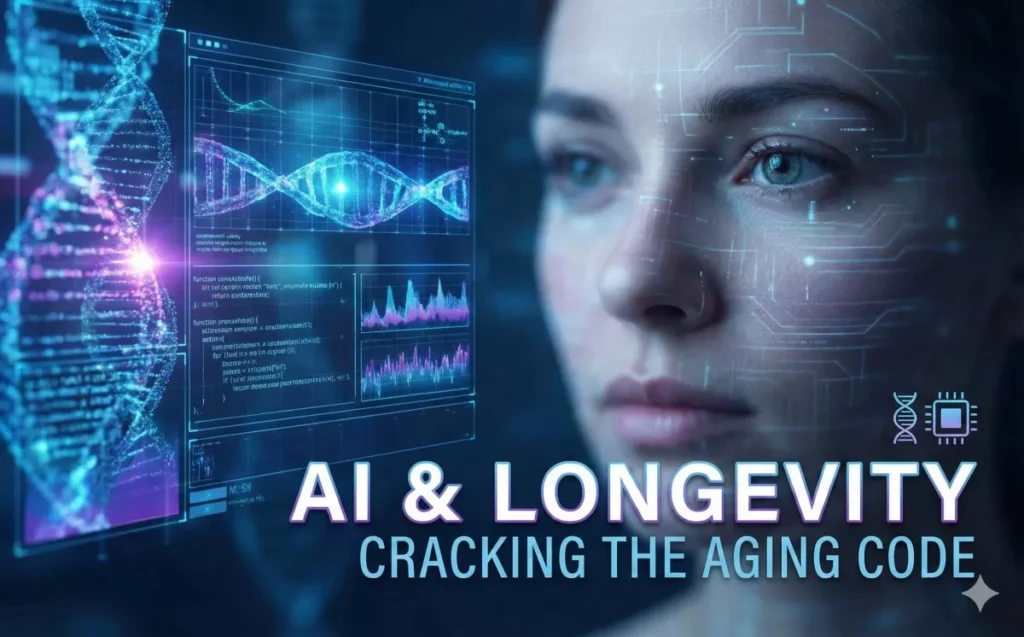
Understanding the biology of aging is incredibly complex, and until recently, much of it remained a mystery. AI is changing that. By processing vast amounts of data that no human could ever study manually, artificial intelligence can uncover hidden patterns, predict aging-related changes, and identify new ways to slow or reverse age-related decline. Here’s how AI does it:
1. Genomic and DNA Data: Mapping the Blueprint of Aging
AI begins by analyzing enormous volumes of genetic information — billions of DNA sequences and variations across populations.
Through machine learning models, it can identify:
- Which genes speed up aging
- Which genes protect against cellular decline
- How genetic mutations influence longevity
This genomic insight helps scientists pinpoint potential targets for anti-aging therapies and understand why some individuals age more slowly than others.
2. Proteins and Cellular Activity: Understanding How the Body Functions
Proteins carry out most of the work inside cells. When they misfold or malfunction, diseases such as Alzheimer’s, Parkinson’s, and other age-related disorders occur.
AI tools like AlphaFold have revolutionized this field by predicting the 3D structure of proteins with extreme accuracy.
With these models, researchers can:
- Identify which proteins are damaged during aging
- Understand how misfolded proteins disrupt cellular processes
- Discover new ways to stabilize or repair these proteins
This gives scientists a clearer picture of how aging progresses at the microscopic level.
3. Biomarkers of Aging: Calculating True Biological Age
Aging isn’t only measured in years — it’s measured in the condition of our cells. AI examines thousands of biomarkers to determine a person’s biological age, which often differs significantly from their chronological age.
Key biomarkers AI evaluates include:
- Inflammation levels: Chronic inflammation speeds up aging.
- Metabolic patterns: Changes in metabolism can signal early aging.
- Telomere length: Shorter telomeres are linked to faster cell aging.
- Gene expression: AI studies how active or inactive certain genes become over time.
By analyzing these markers, AI can predict how quickly someone is aging and identify early risks for age-related diseases long before symptoms appear.
4. Drug Discovery Simulations: Finding Anti-Aging Treatments Faster
Traditionally, drug discovery takes years — sometimes decades. AI accelerates this by running millions of simulations in a short time, predicting which molecules might influence major aging pathways such as:
- mTOR (regulates cell growth and metabolism)
- Sirtuins (linked to DNA repair and longevity)
- AMPK (controls energy balance and cellular health)
- Senescent cell accumulation (cells that stop dividing and cause inflammation)
By identifying promising compounds rapidly, AI dramatically reduces the time and cost required to develop anti-aging drugs. In some cases, AI-designed compounds have moved from concept to clinical trials in under two years.
Can AI Really Slow Down Aging? What Scientists Know So Far
AI does not directly slow aging, but it accelerates discoveries and tools that could help humans age more healthily.
Key findings from current research
- AI speeds up drug discovery AI-designed compounds are reaching clinical trials far faster than traditional methods; one anti-aging candidate entered human testing in under two years, compared with the usual five to ten years.
- AI detects aging earlier Machine learning can pick up subtle signs of accelerated aging from facial features, voice patterns, retinal scans, and blood biomarkers, often before standard tests do.
- AI guides cellular rejuvenation experiments AI-driven reprogramming and modeling help researchers reverse cellular markers of aging in lab models, producing cells that appear younger and healthier.
- AI aims to extend healthspan, not just lifespan Research emphasis is shifting toward increasing the years lived free of disease and disability, rather than merely prolonging life.
The Biggest AI Breakthroughs in Longevity Science
i) AI-Powered Biological Age Calculators
These cutting-edge tools represent a significant shift from relying solely on chronological age (the number of years you’ve been alive) to determining biological age (the true functional age of your body).
- Function: AI algorithms analyze vast datasets, including biomarkers (e.g., DNA methylation, blood markers, immune system status) and lifestyle patterns (e.g., diet, exercise, sleep quality).
- Application: The resulting age estimate, often called a “longevity score,” allows doctors and longevity specialists to create highly personalized intervention plans. If an individual’s biological age is significantly older than their chronological age, the AI helps pinpoint the underlying biological processes that need targeted improvement (e.g., specific nutritional supplements, fitness regimes, or health screenings).
ii) AI-Driven Precision Drug Discovery
Artificial intelligence is dramatically accelerating the search for and development of novel compounds specifically designed to target the hallmarks of aging. This process, which traditionally took over a decade, is being compressed significantly.
- Targeting Aging Mechanisms: Companies use AI to design and virtually test millions of molecules against key biological processes linked to aging:
- Inflammation (Inflammaging): Identifying molecules that reduce chronic, low-grade inflammation.
- DNA Repair: Discovering compounds that enhance the cell’s ability to fix genetic damage.
- Mitochondrial Decline: Designing drugs to boost the function and number of the cell’s energy powerhouses.
- Cellular Senescence: The AI is crucial in identifying senolytics—drugs that selectively clear out “zombie” or senescent cells which accumulate with age and drive inflammation and tissue damage.
- Real-World Impact: An AI-created molecule is already advancing through clinical trials, demonstrating the technology’s capability to deliver effective, novel longevity therapeutics.
iii) AI in Regenerative Medicine and Cell Programming
Regenerative medicine aims to repair or replace damaged human cells and tissues. AI is being used to understand and control the complex cellular processes required for successful regeneration.
- Cell Behavior Prediction: Advanced AI models can predict how cells will differentiate, proliferate, and interact within a tissue environment. This is vital for scientists attempting to replicate the youthful function of aged cells or tissues.
- Optimizing Protocols: The models help optimize complex laboratory protocols, such as cellular reprogramming (turning an adult cell back into a stem cell state) or creating organoids (mini-organs used for testing). By precisely modeling cellular dynamics, AI makes the goal of restoring youthful cell functions more predictable and achievable.
iv) Predicting and Pre-empting Age-Related Diseases
One of the most powerful applications of AI is its ability to analyze complex patient data (genomics, medical history, lifestyle, and imaging) to forecast an individual’s long-term disease risk with unprecedented accuracy.
- Risk Forecasting: AI systems can accurately forecast an individual’s lifetime risk for major age-related conditions, including:
- Cardiovascular Disease (Heart Disease): Predicting risk years before physical symptoms appear.
- Metabolic Disorders (Diabetes): Identifying early signs of insulin resistance.
- Neurodegenerative Conditions (Dementia): Spotting subtle markers in brain scans or cognitive tests.
- Cancer: Determining personalized cancer susceptibility based on genetic and environmental factors.
- Enabling Interventions: This predictive power allows for proactive and preventative interventions. Instead of waiting for a disease to manifest, doctors can initiate lifestyle changes, targeted screenings, or pharmacological treatments well in advance, drastically improving healthspan (the years an individual remains healthy) and life expectancy.
Challenges: Can AI Really Crack Aging Completely
Despite rapid advances, AI still faces major scientific and societal hurdles before it can fully solve aging.
- Aging is multifactorial: Aging results from many interconnected biological processes rather than a single cause, making a one‑size‑fits‑all solution unlikely.
- Clinical validation is slow: Even when AI identifies promising therapies, human safety and efficacy testing through clinical trials takes years.
- Data quality and compatibility: Progress depends on large, well‑curated datasets, but available data vary in format, quality, and standardization, limiting reliable conclusions.
- Ethical and social implications: Widespread life‑extension raises difficult questions about access, healthcare costs, and how societies will adapt to longer, healthier lives.
The Future of Longevity: An AI-Driven Healthspan Revolution
The integration of Artificial Intelligence (AI) into medicine is poised to radically redefine human lifespan and health quality. Scientists are optimistic that AI will be the key driver in helping individuals maintain vitality well into their 90s, and potentially pushing average lifespans toward and beyond 100 years with a significantly improved quality of life. The goal is not merely living longer, but living healthier and smarter.
What the Next Decade May Bring:
The near future of longevity is characterized by hyper-personalization and proactive intervention, powered by AI:
- Hyper-Personalized Longevity Plans: Health strategies will be designed entirely based on comprehensive AI biomarker analysis, moving beyond generic advice to precise, individual optimization of diet, exercise, and lifestyle.
- Targeted AI-Designed Supplements: AI will engineer supplements and compounds specifically formulated to address an individual’s unique genetic aging pathways and deficiencies.
- Decades-Early Disease Prediction: AI algorithms will be able to forecast the onset of major age-related diseases (e.g., cancer, dementia, heart disease) decades before the first symptoms appear, allowing for powerful preemptive interventions.
- Advanced Regenerative Therapies: Complex regenerative procedures, like cell and tissue repair, will be precisely guided and optimized by AI models to ensure the successful replication and restoration of youthful biological function.
- AI-Powered In-Vivo Monitoring: The development of nanotechnology monitored by AI will allow for continuous, internal tracking of biological aging processes, enabling immediate intervention when sub-optimal changes are detected.
- Accelerated Drug Development: AI platforms will dramatically speed up the creation of next-generation anti-aging drugs (e.g., senolytics, compounds targeting metabolic pathways), leading to faster development and compounds with significantly fewer adverse side effects.
The ultimate potential of this revolution is not immortality, but the profound realization of longer, healthier, and more productive lives.
Final Verdict: Can AI Crack the Process of Aging?
AI has not cracked aging yet — but it is the closest science has ever been.
While humans may not become ageless anytime soon, AI is transforming longevity research, revealing new ways to slow aging, prevent diseases, and improve healthspan. In the coming years, AI will likely uncover breakthroughs that change how we age, how long we live, and how healthy those years can be.
The race isn’t about living forever.
It’s about living better – and AI is becoming the most powerful tool in that mission.