
Artificial Intelligence (AI) is transforming healthcare by making diagnosis faster, treatment more accurate, operations more efficient, and patient outcomes significantly better. From predictive analytics to robotic surgeries and AI-powered imaging, the healthcare industry is shifting from traditional reactive care to a new, intelligent, proactive, and data-driven ecosystem.
Why AI Is Reshaping Healthcare Now
The healthcare industry has always relied on innovation, but AI has accelerated progress more than any other technology in recent decades. With billions of medical data points being generated daily—lab results, scans, EHRs, wearable data—AI enables doctors and hospitals to make sense of this massive information stream. As a result, decision-making becomes faster, more personalized, and more precise.
AI is no longer just a futuristic concept—it’s being used in real hospitals, diagnostics centers, telemedicine platforms, and pharmaceutical labs worldwide. From virtual health assistants to algorithm-based drug discovery, the industry is witnessing a historic transformation.
Recent Statistics Highlighting AI’s Impact on Healthcare
- About 86% of healthcare organizations say they are already extensively using AI.
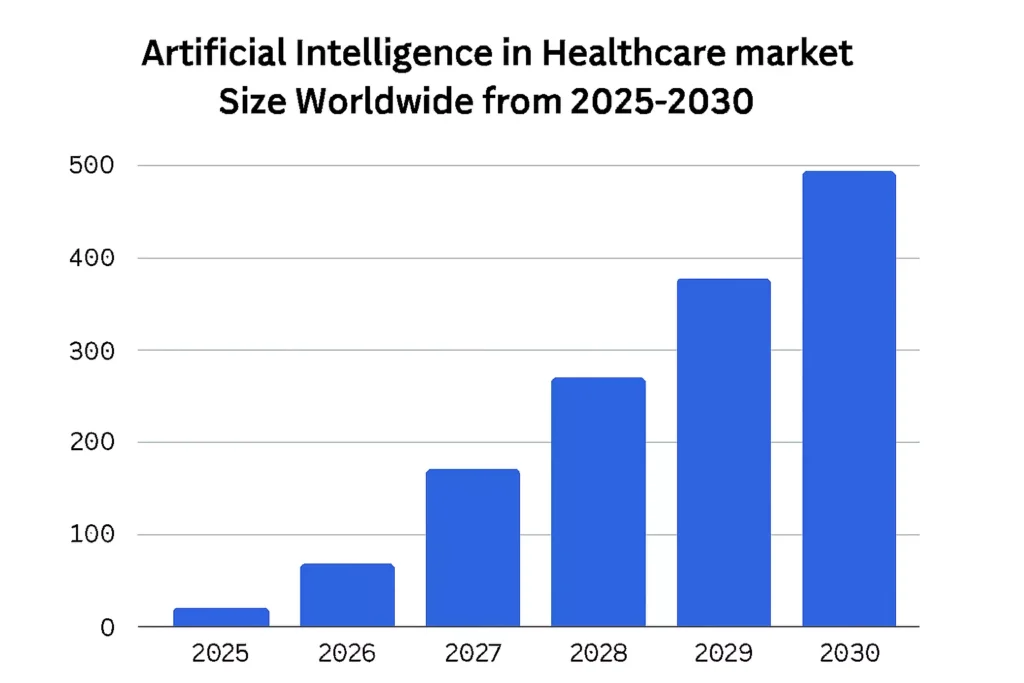
- The global AI in healthcare market was valued at approx US $29.01 billion in 2024, and projected to grow to over US $504 billion by 2032.
- Around 92% of healthcare leaders believe generative AI improves operational efficiency, and 65% see it as a tool for faster decision-making.
- A recent report says about 22% of healthcare organizations have implemented domain-specific AI tools in 2025, which is a 7× increase over 2024.
- Globally, there are 4.5 billion people without access to essential healthcare services, and a projected health-worker shortage of 11 million by 2030—pointing to how vital AI support becomes.
1. How AI Improves Diagnosis and Early Detection
AI is bringing one of the biggest shifts in modern healthcare by dramatically improving diagnostic accuracy and enabling early detection of diseases. Traditional methods often rely on human interpretation—which can vary from doctor to doctor—but AI uses vast amounts of medical data to identify signs of disease with exceptional precision.
AI-Powered Medical Imaging
AI-based imaging systems can analyze X-rays, CT scans, MRIs, and mammograms far more quickly and with higher sensitivity than manual interpretation alone. These systems are trained on millions of annotated images, allowing them to detect subtle abnormalities that even experienced radiologists may overlook.
AI tools can highlight suspicious regions, compare current scans with historical patterns, and even recommend further tests. This helps reduce diagnostic delays and improves patient outcomes.
Key Advantages of AI Imaging
- Early cancer detection: AI can recognize early-stage tumors when they are too small for the human eye to detect.
- Higher accuracy: AI reduces misdiagnosis by spotting tiny lesions, fractures, or abnormalities.
- Less human error: Fatigue, distractions, and workload do not affect AI interpretation.
- Rapid scan analysis: Results are generated within seconds, speeding up emergency care and treatment planning.
For example, AI models used in breast cancer screening have demonstrated the ability to detect cancer 20–30% earlier than traditional mammograms. Similarly, ophthalmology platforms powered by AI can detect diabetic retinopathy, glaucoma, and retinal disorders instantly, enabling earlier intervention.
Predictive Analytics for Disease Prevention
AI doesn’t stop at diagnosis—it also helps predict diseases before they occur. Using massive data inputs such as genetics, lifestyle habits, medical history, lab results, and wearable device data, AI models can forecast the likelihood of developing serious conditions.
What AI Analyzes:
- Genetic predispositions
- Daily physical activity
- Heart rate variability
- Blood glucose patterns
- Environmental and lifestyle factors
- Previous health events
Conditions AI Can Predict:
- Heart attacks and cardiovascular diseases
- Strokes
- Diabetes complications
- Severe respiratory issues
- Life-threatening infections like sepsis
This predictive capability marks a major shift from reactive medicine—where patients seek help after symptoms appear—to proactive healthcare, where risks are identified and prevented early. As a result, AI is helping save lives and reduce healthcare costs worldwide.
2. Transforming Treatment Through Personalization
One of the most significant advancements enabled by AI is personalized or precision medicine. Every patient is unique, and AI allows healthcare providers to tailor treatments based on each person’s genetic makeup, environment, and health history.
Personalized Medicine Based on Data
Instead of using a “one-size-fits-all” treatment plan, AI analyzes a wide range of patient-specific data points, including:
- Genetic sequences
- Biomarker levels
- Lifestyle and dietary behaviors
- Past treatment responses
- Existing health conditions
AI then recommends the most effective treatment options with the highest probability of success.
Example: In oncology, AI helps identify which chemotherapy drugs will be most effective for a specific tumor type. This reduces time wasted on ineffective treatments and increases survival rates.
AI in Treatment Planning
AI-driven tools provide doctors with powerful support when planning complex treatments. These tools simulate various scenarios and consider factors that humans cannot analyze manually.
AI Enhances Treatment Planning For:
- Radiation therapy (optimized dose and target precision)
- Chemotherapy (personalized drug combinations)
- Robotic and minimally invasive surgeries
- Organ transplant matching (best donor-recipient compatibility)
By evaluating thousands of variables—something impossible for human clinicians alone—AI creates highly personalized and effective treatment pathways.
3. AI in Surgery: Faster, Safer, More Accurate Procedures
Surgery has witnessed some of the most dramatic advancements with AI. AI-powered robotic systems assist surgeons in performing delicate, complex procedures with enhanced precision and control.
Robotic-Assisted Surgery
AI-guided surgical robots provide real-time insights, steady instrument control, and enhanced visibility. This leads to better outcomes and fewer complications.
Benefits of AI-Assisted Surgery
- Micro-level precision: Robots can make extremely precise incisions.
- Reduced fatigue: Surgeons can operate longer with greater accuracy.
- Lower blood loss and pain: Minimally invasive techniques result in faster recovery.
- Shorter hospital stay: Patients heal quicker due to improved surgical accuracy.
- Fewer complications: AI helps anticipate risks during surgery.
Systems like the Da Vinci Surgical System use AI-driven analytics to assist surgeons with high accuracy, making procedures such as prostate surgery, cardiac valve repair, and gynecological operations safer.
Pre-Operative Planning
AI analyzes patient scans and medical data to create detailed surgical simulations. This helps surgeons:
- Understand potential risks
- Choose the safest surgical route
- Predict complications in advance
- Improve surgical strategy
Post-Operative Care
After surgery, AI tools monitor vital signs, wound healing patterns, and patient recovery data. If any abnormal patterns appear, AI alerts medical staff—preventing complications early.
4. Enhancing Patient Care With Intelligent Tools
AI isn’t just improving diagnostics and treatments—it’s transforming the overall patient experience, both inside and outside hospitals.
Virtual Health Assistants
AI-powered virtual assistants help patients manage daily healthcare tasks effortlessly. These assistants can:
- Schedule appointments
- Provide medical reminders
- Monitor symptoms
- Offer medication guidance
- Support chronic disease management
- Facilitate communication with doctors
This reduces the workload on healthcare staff while giving patients instant support.
Remote Monitoring Through Wearables
Smart devices such as smartwatches, heart monitors, glucose sensors, and sleep trackers constantly collect health data. AI analyzes this information to detect unusual patterns in real time.
Benefits of AI-Enhanced Wearables:
- Early detection of heart irregularities
- Better diabetes management
- Sleep quality optimization
- Continuous monitoring without hospital visits
This proactive monitoring helps detect emergencies earlier and improves quality of life for patients with chronic conditions.
Mental Health Support
AI tools are also transforming mental health care. They offer:
- Real-time mood tracking
- Behavioral pattern analysis
- Stress or anxiety alerts
- Therapy-based chatbots
- Crisis intervention notifications
By providing 24/7 support, AI is making mental health services more accessible, private, and stigma-free.
5. Revolutionizing Operations and Hospital Management
AI’s impact isn’t limited to patient care. It is fundamentally improving the efficiency of hospital administration and operations.
AI in Administration
Hospitals use AI to streamline time-consuming administrative tasks such as:
- Managing patient flow
- Scheduling staff
- Allocating beds
- Processing insurance claims
- Reducing document errors
This reduces operational costs and allows staff to focus more on patient care instead of paperwork.
Supply Chain Optimization
AI predicts supply needs based on historical data and real-time demand. It helps hospitals:
- Prevent shortages of medicines
- Forecast equipment requirements
- Manage inventory during crises
- Reduce wastage
This is crucial during emergencies such as pandemics.
Fraud and Error Reduction
AI algorithms detect unusual billing patterns, duplicate claims, and other irregularities that may indicate fraud or error. This saves billions of dollars each year and reduces insurance misuse.
6. AI in Drug Discovery and Clinical Trials
AI has dramatically accelerated drug discovery—a process that traditionally takes more than a decade.
Accelerated Drug Discovery
AI can analyze molecular structures, predict drug behavior, test millions of compound combinations, and identify promising drug candidates much faster than human researchers.
This significantly reduces research time and costs.
AI played a major role in creating vaccines and antiviral treatments during the COVID-19 pandemic by identifying effective compounds at record speed.
Smarter Clinical Trials
AI optimizes clinical trials by:
- Selecting the most suitable participants
- Monitoring patient reactions in real-time
- Predicting dropout risks
- Ensuring safety and compliance
- Reducing trial duration
This results in safer medications and faster approvals.
7. Telemedicine Powered by Artificial Intelligence
Telemedicine has grown exponentially, and AI makes virtual care smarter and more intuitive.
AI in Virtual Consultations
During online consultations, AI tools can:
- Analyze symptoms
- Recommend diagnostic tests
- Cross-check findings with medical records
- Suggest treatment plans
This helps doctors provide accurate care remotely.
Real-Time Language Translation
AI translation systems allow doctors to communicate with patients who speak different languages, making global healthcare more accessible.
Voice and Emotion Detection
AI evaluates vocal tones, breathing sounds, and emotional cues to identify conditions such as:
- Stress
- Depression
- Anxiety
- Early respiratory disorders
This adds a deeper layer of insight during virtual checkups.
8. Improving Public Health and Disease Outbreak Management
AI helps governments and global agencies stay prepared for health emergencies.
AI Helps Authorities:
- Track disease spread
- Predict outbreak hotspots
- Allocate healthcare resources
- Alert communities in real-time
- Support emergency response strategies
During pandemics or epidemics, AI models analyze infection patterns, test results, and population data to guide effective decision-making at scale.
9. Ethical Challenges and the Future of AI in Healthcare
Despite its benefits, AI raises important ethical and regulatory issues.
Key Ethical Concerns
- Protecting patient data and consent
- Avoiding biased AI algorithms
- Preventing over-reliance on AI systems
- Establishing global healthcare regulations
The Future of AI in Healthcare
Experts predict that AI will:
- Become essential in medical education
- Help build 24/7 AI-driven hospitals
- Make fully personalized treatments standard
- Improve healthcare access in remote areas
AI isn’t here to replace doctors—it’s here to enhance their capabilities and help them deliver better care than ever before.
Conclusion: A New Era of Intelligent Healthcare
AI is transforming healthcare into a smarter, faster, and more accurate system. From early diagnosis and personalized treatments to hospital management and drug development, AI is reshaping every corner of the medical world. The combination of human expertise and AI-driven insights will define the future of global healthcare—one where diseases are detected earlier, treatments are more effective, and patient outcomes dramatically improve.
This is the beginning of a new era where medicine becomes more predictive, preventative, and personalized—thanks to the transformative power of Artificial Intelligence.