
In 2026, the AI landscape in Silicon Valley has fundamentally shifted from “generative chat” to “physical agency” and “autonomous reasoning.” Specifically, the most critical startups defining this new era include Figure AI and Skild AI (robotics and embodied intelligence), Hark (human-centric consumer AI hardware), Etched (specialized chips breaking the GPU monopoly), Magic (autonomous software engineering), and Safe Superintelligence (SSI). These companies are no longer just building tools that talk; on the contrary, they are engineering systems that move, build, and reason with minimal human oversight.
Silicon Valley 2026: The Year of “The Heavy Lifters”
Walk into a coffee shop on University Avenue in Palo Alto this January, and you will notice the conversation has changed. Two years ago, the buzz was frantic—everyone was pitching a “wrapper” for ChatGPT or a new image generator. However, today the atmosphere is heavier, quieter, and infinitely more serious. The “Tourists” have left; consequently, the “Builders” remain.
2026 is officially the year the rubber meets the road—or rather, the year the brain meets the body. We are witnessing the Physical Awakening of AI. The startups commanding billion-dollar valuations this year aren’t selling chatbots to draft your emails; instead, they are selling labor, infrastructure, and genuine autonomous thought.
The hype cycle has flattened into a productivity slope. Investors are no longer asking “What can it write?” Rather, they are asking “What can it do while I sleep?” and “Can it fold laundry?”
Below is the definitive deep dive into the companies defining our reality in 2026.
1. The Physical Awakening: Brains Finally Meet Bodies
For decades, robotics and AI were separate disciplines. Robots were dumb but strong, while AI was smart yet trapped in a server. In 2026, however, those lines have completely dissolved.
Figure AI
- Headquarters: Sunnyvale, CA
- Founder: Brett Adcock
- The Vibe: “Tesla meets Boston Dynamics, but useful.”
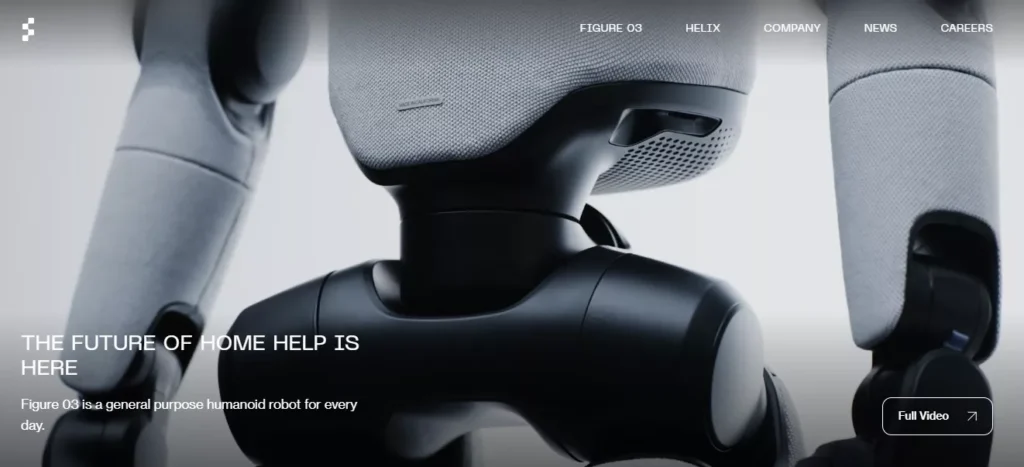
If 2024 was the year the world saw Figure 01 make coffee, 2026 is undoubtedly the year the world hired Figure 02. Figure AI has effectively won the early sprint for the general-purpose humanoid. By integrating OpenAI’s most advanced multimodal models directly into a robotic chassis, they have created a machine that learns not by code, but through observation.
Why They Are Hot:
Figure isn’t just a robotics company; fundamentally, they are a labor supply company. In 2026, their pilot programs with BMW and Amazon have moved from “cute experiments” to critical infrastructure. We are seeing the first “Blue Collar AI” fleets—robots that can unload trucks, sort recycling, and handle hazardous materials. Furthermore, the “secret sauce” isn’t the metal legs; it is the neural network that allows the robot to correct its own mistakes in real-time without needing a human to rewrite the code.
Skild AI
- Headquarters: Pittsburgh / San Francisco
- The Vibe: The “Android” of Robotics.
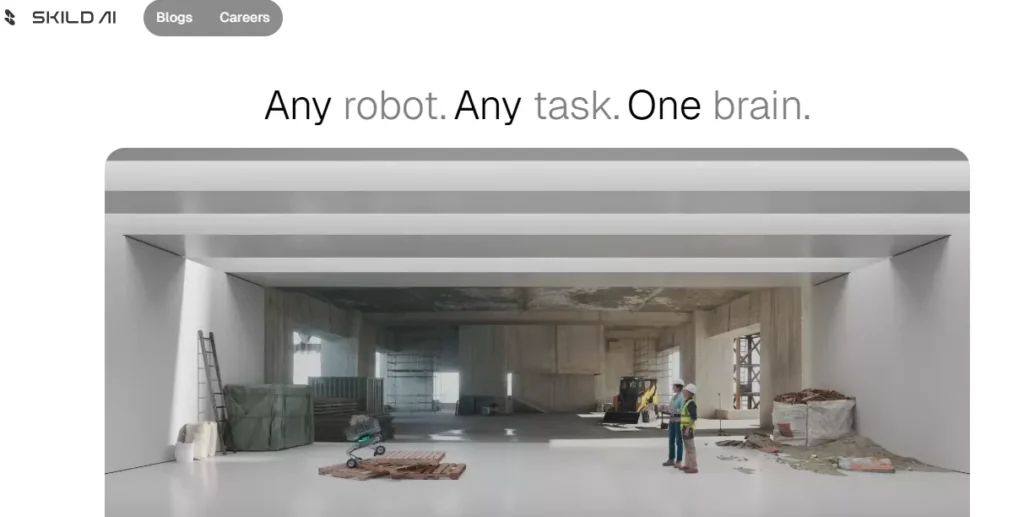
While Figure is building the iPhone (a perfectly integrated hardware/software robot), Skild AI is building the Android—the universal operating system for everything else. Backed by heavyweights like Nvidia and SoftBank, Skild AI is currently aiming for a staggering $14 billion valuation.
The “GPT-3 Moment” for Robots:
Skild’s massive breakthrough was creating a “General Purpose Brain” that can be uploaded into almost any machine, whether it be a quadraped, a robotic arm, or a wheeled drone. Before Skild, if you wanted a robot to open a door, you had to train it on that specific door. Now, conversely, Skild provides a pre-trained “World Model.” You upload their brain into a generic robot dog, and it essentially “knows” what a door is, how physics works, and how not to slip on ice. As a result, they are the hottest software license in the Valley because they are democratizing physical intelligence.
2. The Design Renaissance: Putting the “Human” in AI
After years of cold, text-based interfaces, Silicon Valley is remembering that humans appreciate beautiful things. Therefore, the command line is out, and natural, invisible interaction is in.
Hark
- Headquarters: San Francisco, CA
- Key Personnel: Abidur Chowdhury (ex-Apple)
- The Vibe: “Apple, if it were born in the AI age.”
Hark is the “Mystery Box” startup that everyone is whispering about. Founded by Brett Adcock (yes, the same entrepreneur behind Figure) and largely self-funded with $100 million, Hark has been aggressively poaching top design talent. Their biggest coup? Specifically, hiring Abidur Chowdhury, the designer behind the ultra-thin iPhone hardware.
Why Watch Them:
Hark is betting that we are tired of screens. Consequently, they are building “Human-Centric AI”—hardware devices that integrate into the home not as gadgets, but as ambient presence. While rumors swirl about what their first product actually is (Smart glasses? An AI pendant that actually works?), the pedigree suggests it will be the first AI hardware that doesn’t look like a science project. In a sea of utilitarian software, Hark is uniquely obsessed with desirability.
3. The Silicon Rebellion: Breaking the Nvidia Monopoly
For five years, Nvidia was the only game in town. If you wanted to run AI, you paid the “Green Tax.” In 2026, however, the rebellion has arrived, and it is led by a group of dropouts who decided to rewrite the rules of physics.
Etched
- Headquarters: Cupertino, CA
- The Vibe: “Speed at all costs.”
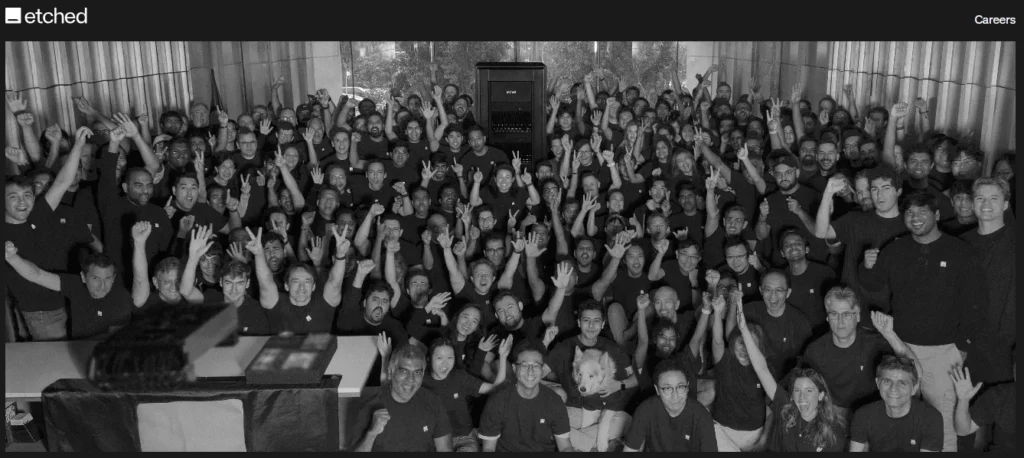
Etched is the most audacious hardware bet in the Valley. While everyone else was building general-purpose GPUs (chips that can do graphics, crypto, and AI), Etched placed a massive bet on a single architecture: The Transformer.
The Tech:
They built a chip called “Sohu” that cannot play video games. Nor can it render Pixar movies. Instead, it can only do one thing: run Transformer models (the architecture behind ChatGPT) insanely fast. By removing all the “junk” needed for other tasks, they have created a chip that runs LLMs 20x faster and cheaper than the best Nvidia GPU.
Why It Matters in 2026:
We have reached the “Inference Era.” We aren’t just training models anymore; specifically, we are running them billions of times a day. Companies are drowning in cloud costs. Thus, Etched is the life raft. If you are using a real-time voice agent in 2026 that responds instantly without that awkward 2-second pause, it’s likely running on Etched silicon.
4. The Silent Coders: Software That Writes Itself
The role of the “Junior Developer” has effectively vanished. In its place are autonomous coding agents that don’t just “complete code”—they architect it.
Magic
- Headquarters: San Francisco, CA
- The Vibe: Deep focus, dark mode, zero distractions.
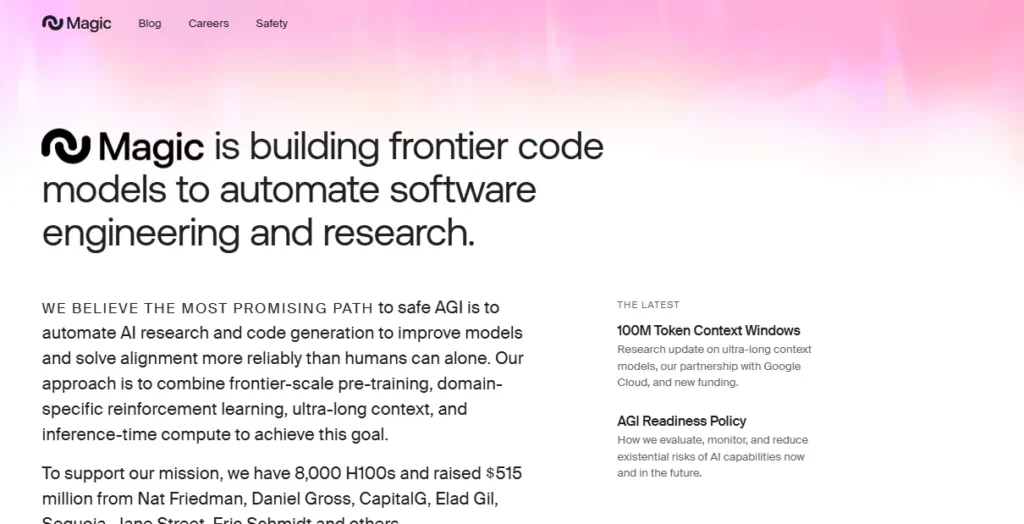
While tools like GitHub Copilot were “assistants,” Magic is a “colleague.” In 2026, Magic has solved the “Context Window” problem. Most AIs forget what you told them 10 minutes ago; in contrast, Magic’s models have a massive, effectively infinite working memory.
The Workflow Revolution:
You don’t paste code snippets into Magic. Instead, you give it access to your entire repository—millions of lines of code—and say, “Refactor the payment authentication system to support the new API, and write the unit tests.” Magic reads every file, understands the dependencies, plans the architecture, writes the code, and debugs its own errors. Ultimately, it is the closest we have come to AGI (Artificial General Intelligence) in the domain of logic and syntax.
5. The Watchmen: The “Manhattan Project” of Safety
As capabilities explode, the fear of “rogue AI” has moved from sci-fi forums to boardrooms.
Safe Superintelligence (SSI)
- Headquarters: Palo Alto / Tel Aviv
- Founder: Ilya Sutskever (Co-founder of OpenAI)
- The Vibe: Monastic, intense, academic.
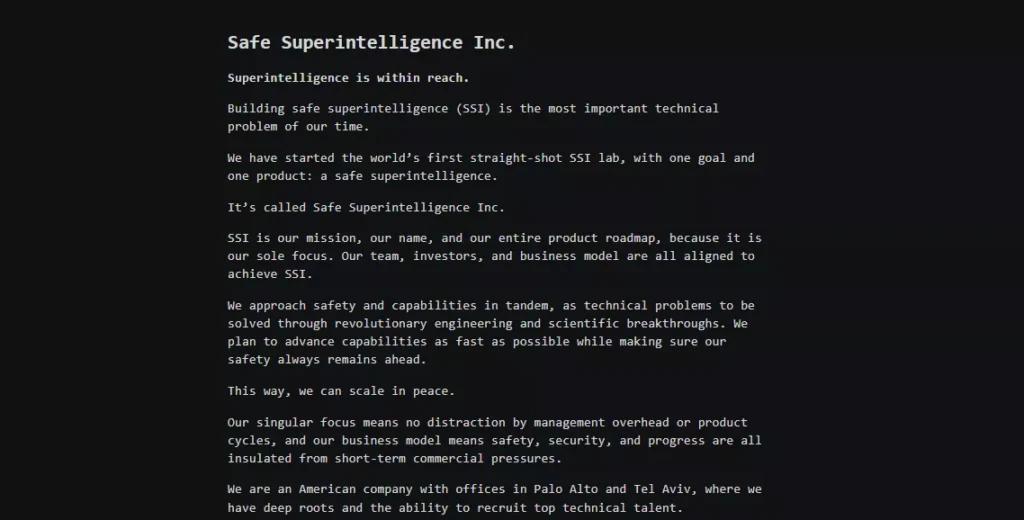
When Ilya Sutskever left OpenAI, he famously declared that the “Scaling Era” was dead—meaning we couldn’t just keep making models bigger to make them smarter. We needed a new paradigm. SSI is that paradigm.
Why They Are Unique:
SSI has no product. Furthermore, they have no customer support, nor do they have a sales team. They are a pure research lab with one goal: “Solve Safety, then Solve Superintelligence.” They are the “adults in the room.” In 2026, as other models occasionally hallucinate or cause security breaches, SSI is becoming the gold standard for “Aligned AI.” They are building the mathematical proofs that ensure an AI system cannot disobey its core values. If a fundamental breakthrough in “reasoning integrity” happens this year, it will almost certainly come from this lab.
Comparative Outlook: The 2026 Power Players
To help you navigate the landscape, here is a breakdown of who is winning which vertical.
| Startup | Vertical | The “Killer App” | Valuation Status |
| Figure AI | Embodied AI | Blue Collar Labor: Robots that can work 24/7 in warehouses. | Decacorn ($10B+) |
| Skild AI | Robotics OS | The Universal Brain: One model to control any robot body. | Hyper-Growth ($14B est.) |
| Hark | Consumer Hardware | Ambient AI: Devices that blend into the home (Design-led). | Stealth / Rising Star |
| Etched | Semiconductors | Sohu Chip: Running LLMs 20x faster than GPUs. | Unicorn |
| Magic | Dev Tools | Infinite Context: Coding agents that never forget. | Unicorn |
| SSI | AI Safety | Superalignment: The only AI guaranteed not to go rogue. | Unknown (Research Focus) |
The “So What?” for You
Why does this list matter to you, the user?
- If you are a worker: The “White Collar” safety net is fraying, but the “Blue Collar” revolution is just starting. Therefore, the most valuable skill in 2026 is “Agent Orchestration”—the ability to manage a team of AI agents (like Magic or Figure) to get a job done. You are no longer the writer; you are the editor. Similarly, you are no longer the coder; you are the architect.
- If you are an investor: The easy money is gone. The “wrapper” companies are dead. Value is now accruing to Infrastructure (Etched), Physical Reality (Figure/Skild), and Trust (SSI).
- If you are a consumer: Expect 2026 to be the year AI becomes invisible. It will move off your screen and into your living room (Hark) and your daily services. Consequently, the frustration of “dumb” chatbots is ending; the era of anticipatory, helpful agents is beginning.
Frequently Asked Questions (FAQs)
1. Which Silicon Valley AI startup is currently the most valuable in 2026?
While public valuations shift rapidly, OpenAI and Anthropic continue to lead the pack, with OpenAI eyeing a historic $500 billion IPO later this year. However, in the realm of “new” breakout stars, Figure AI and Safe Superintelligence (SSI) have seen the most explosive valuation jumps, driven by the massive demand for humanoid labor and “trust-by-design” security architectures.
2. Is 2026 the year AI finally replaces entry-level coding jobs?
It is less about “replacement” and more about “evolution.” Startups like Magic and Cognition have introduced “Autonomous Engineers” that handle 90% of routine debugging and refactoring. Consequently, the industry has shifted; junior developers are now being hired as “Agent Managers,” overseeing a fleet of AI coders rather than writing every line of syntax manually.
3. What is “Physical AI,” and why is everyone in the Valley talking about it?
Physical AI (or Embodied AI) is the integration of large-scale neural networks into physical machines. Unlike the “stiff” robots of the past, 2026 startups like Skild AI and Figure use “World Models” that allow robots to learn by watching humans. This has triggered a gold rush in Silicon Valley, as investors pivot from digital chatbots to machines that can actually move boxes, sort laundry, and perform warehouse labor.
4. How can I invest in these top Silicon Valley AI startups before they go public?
Direct investment in early-stage unicorns like Etched or Hark is typically reserved for accredited investors via platforms like EquityZen or Forge Global. However, retail investors are increasingly gaining exposure through “proxy” investments—buying shares in companies like Nvidia, Microsoft, or SoftBank, which hold massive equity stakes in the startups listed above.
5. Which AI sector will see the most growth through the end of 2026?
The consensus among Valley VCs is that “Agentic Workflows” (AI that performs multi-step tasks) and “Energy-Efficient Silicon” (startups like Etched) will dominate. As the world hits a “power wall” with electricity shortages, any startup that can make AI run 20x faster with 70% less power is effectively sitting on a gold mine.